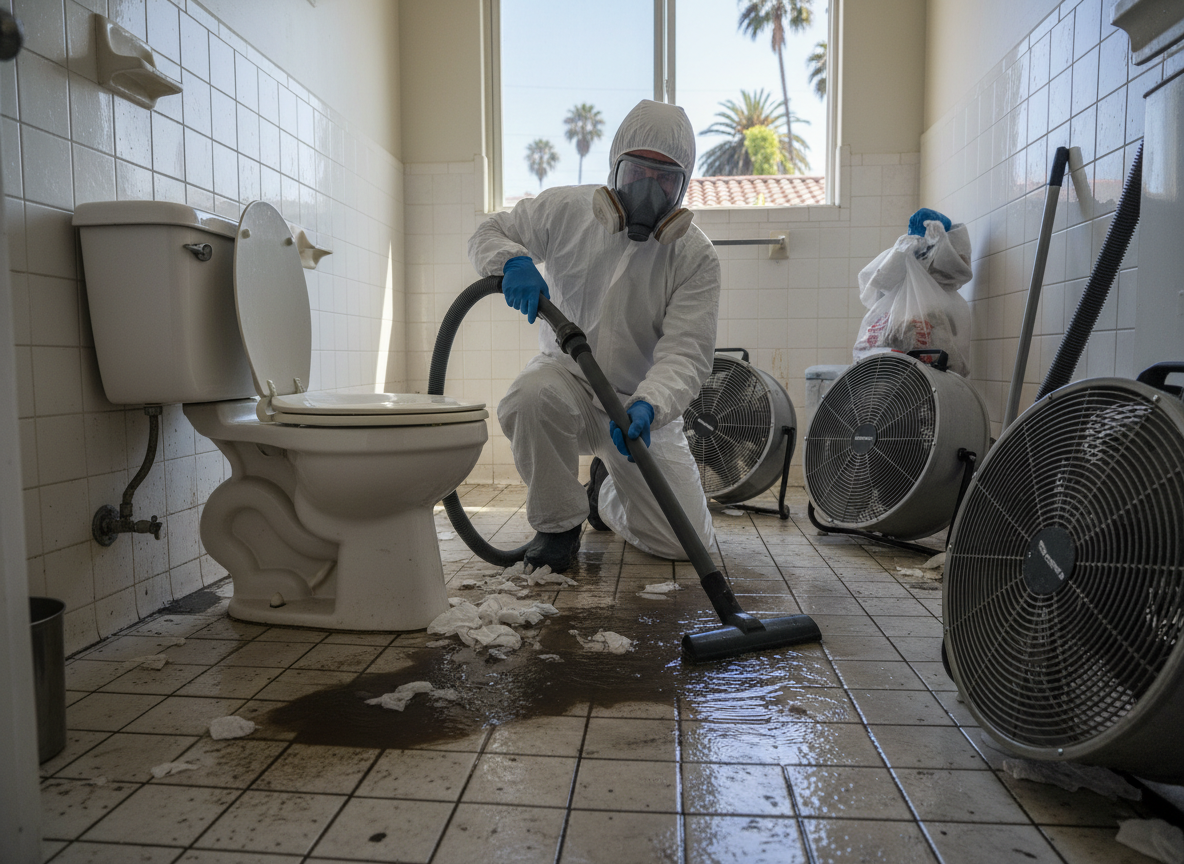
Toilet overflows in San Pedro often stem from aging cast-iron waste lines common in pre-1970 homes throughout Downtown San Pedro and Point Fermin. When water escapes the fixture, it quickly migrates under tile or vinyl flooring into the subfloor, especially where marine humidity slows natural evaporation. Technicians must pull baseboards and use moisture meters to locate hidden saturation before mold sets in within 48 hours under the area’s mild Mediterranean conditions.
Extraction begins with containment to protect adjacent rooms, followed by removal of standing water using truck-mounted pumps. In Rancho Palos Verdes hillside properties or Harbor City flats, slope and soil drainage can push overflow toward foundations, requiring perimeter checks that differ from flat Torrance jobs. Drying then relies on air movers and dehumidifiers calibrated for the salt-air environment that accelerates corrosion on metal ductwork.
Homeowners sometimes attempt DIY cleanup with shop vacs, but residual moisture trapped in grout lines or under cabinets near the USS Iowa waterfront properties frequently leads to secondary damage weeks later. Proper documentation of affected materials helps when filing claims with insurers familiar with Los Angeles County coastal claims.
Seasonal Considerations
San Pedro’s marine influence keeps temperatures moderate year-round, yet winter storms increase sewer backups from the Port of Los Angeles drainage system, raising the volume of overflows that reach living spaces.
Technician insight
In San Pedro, the thing that catches most people out with Toilet overflow cleanup is how the marine humidity combines with older slab-on-grade homes around Cabrillo Marine Aquarium to trap moisture under tile for weeks if you don’t pull the baseboards and run proper airflow right away.
Bathroom Overflow Near Point Fermin Park
A Point Fermin homeowner discovered water spreading from a toilet into the hallway after a clog. We located saturation extending under the adjacent bedroom subfloor due to the slight slope toward the park. Extraction and targeted drying prevented mold growth in the salt-air environment, restoring the space without removing the original hardwood.
How it works
- 1
Initial Assessment
Technician arrives within the hour, maps moisture with meters, and identifies affected materials in the bathroom and adjacent rooms.
- 2
Water Extraction
Standing water is removed with portable and truck-mounted equipment while containing the area to prevent spread to hallways or bedrooms.
- 3
Drying and Monitoring
Air movers and dehumidifiers run for several days with daily moisture readings until subfloor and wall cavities reach dry standards.
- 4
Sanitization and Restoration
Antimicrobial treatment is applied, followed by removal of unsalvageable materials and coordination for flooring or cabinet repairs.
Pricing
Cost depends on square footage affected, depth of water penetration into subfloors, and whether contents require separate handling.