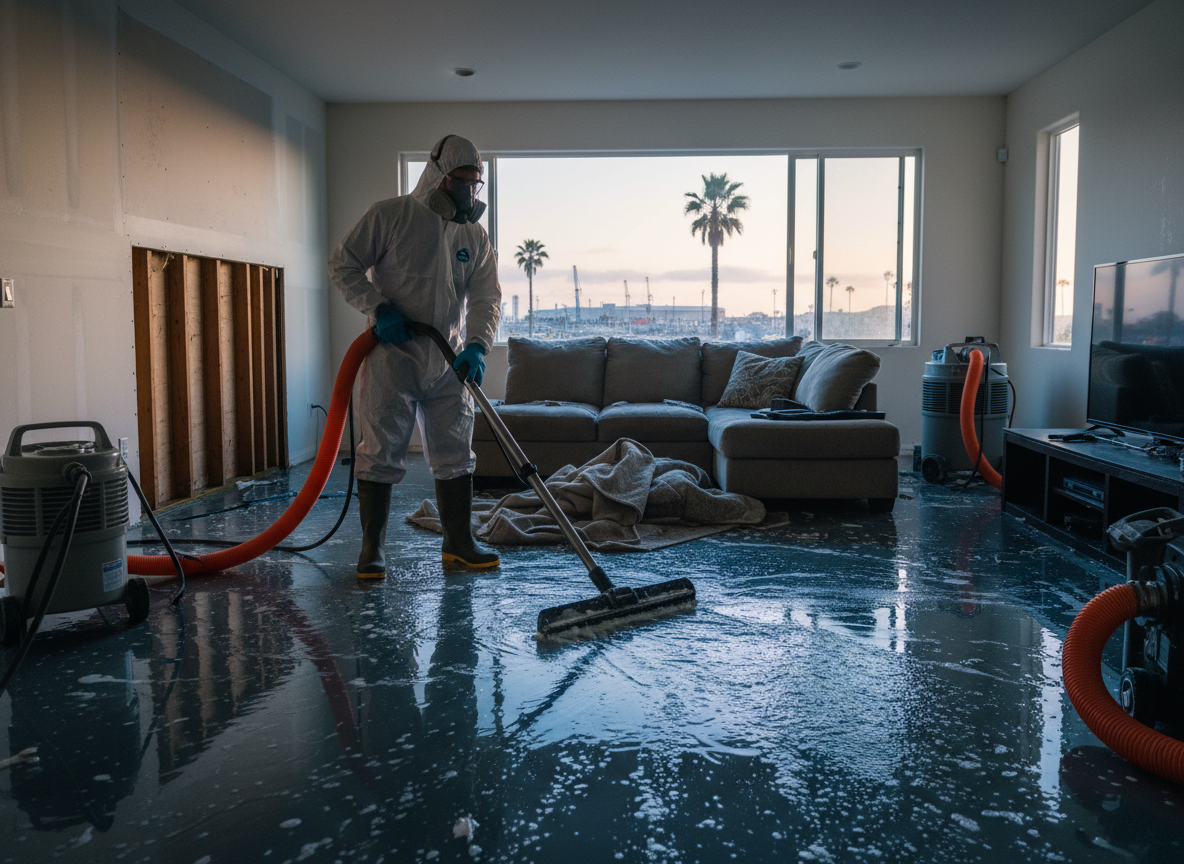
San Pedro's older housing stock built before modern waterproofing standards often features plaster walls and raised foundations that trap water along sill plates when marine moisture combines with sudden leaks. Emergency water removal starts with locating the source then pulling standing water before it migrates into the crawl spaces common in Point Fermin and Harbor City neighborhoods. Technicians use truck-mounted extraction units sized for the volume typical after winter storms that roll in from the Pacific rather than relying on smaller portable units that leave residual moisture in Los Angeles County soil conditions.
Marine influence keeps relative humidity elevated year-round so any delay in extraction allows moisture to wick into subflooring and joists near the Port of Los Angeles. We cut baseboard strategically to reach wall cavities without unnecessary demolition and monitor moisture meters at multiple depths to confirm drywall and insulation are dry before closing cavities. Homes near Cabrillo Marine Aquarium and the USS Iowa sit on slightly sloping terrain that can channel runoff toward foundations during heavy rain events, changing the extraction sequence from simple floor work to perimeter trench drying.
Wilmington and Torrance border properties share similar aging plumbing that can fail under pressure spikes common after city main work. In these cases extraction must account for possible Category 2 water that requires separate containment to avoid cross-contamination with clean living spaces. We document every step with photos and meter readings so homeowners can show insurers exactly where water traveled through the structure.
Technician insight
In San Pedro the thing that catches most people out with emergency water removal is how quickly water travels under the hardwood floors in 1920s-1940s homes near Downtown San Pedro once it hits the crawl space; the marine humidity keeps everything damp longer so you have to pull baseboards and run air under the floor or the joists stay wet for weeks.
Burst Supply Line Under Kitchen
A homeowner in Rancho Palos Verdes called after a supply line split and sent water across the slab into the adjacent family room. We found water had wicked three feet up the drywall and pooled under the floating floor. Extraction removed the bulk water, we opened the toe-kick on the cabinets and placed drying equipment that reached the subfloor. After four days of monitoring the readings dropped to acceptable levels and the floor was saved without full replacement.
How it works
- 1
Arrival And Safety
Technician arrives from the 682 W 9th St base, shuts off water if still flowing, and sets containment to protect unaffected rooms.
- 2
Standing Water Extraction
Truck-mounted pumps remove bulk water from floors and low areas while directing flow away from foundations common on San Pedro slopes.
- 3
Moisture Mapping
Infrared and pin meters locate hidden water in walls and subfloors typical of pre-1960s homes near Point Fermin Park.
- 4
Initial Drying Setup
Air movers and dehumidifiers begin the drying process before secondary mold growth starts in the mild but humid local climate.
Pricing
Upfront quotes after inspection; final cost depends on water volume, number of affected rooms, and whether wall cavities require opening.