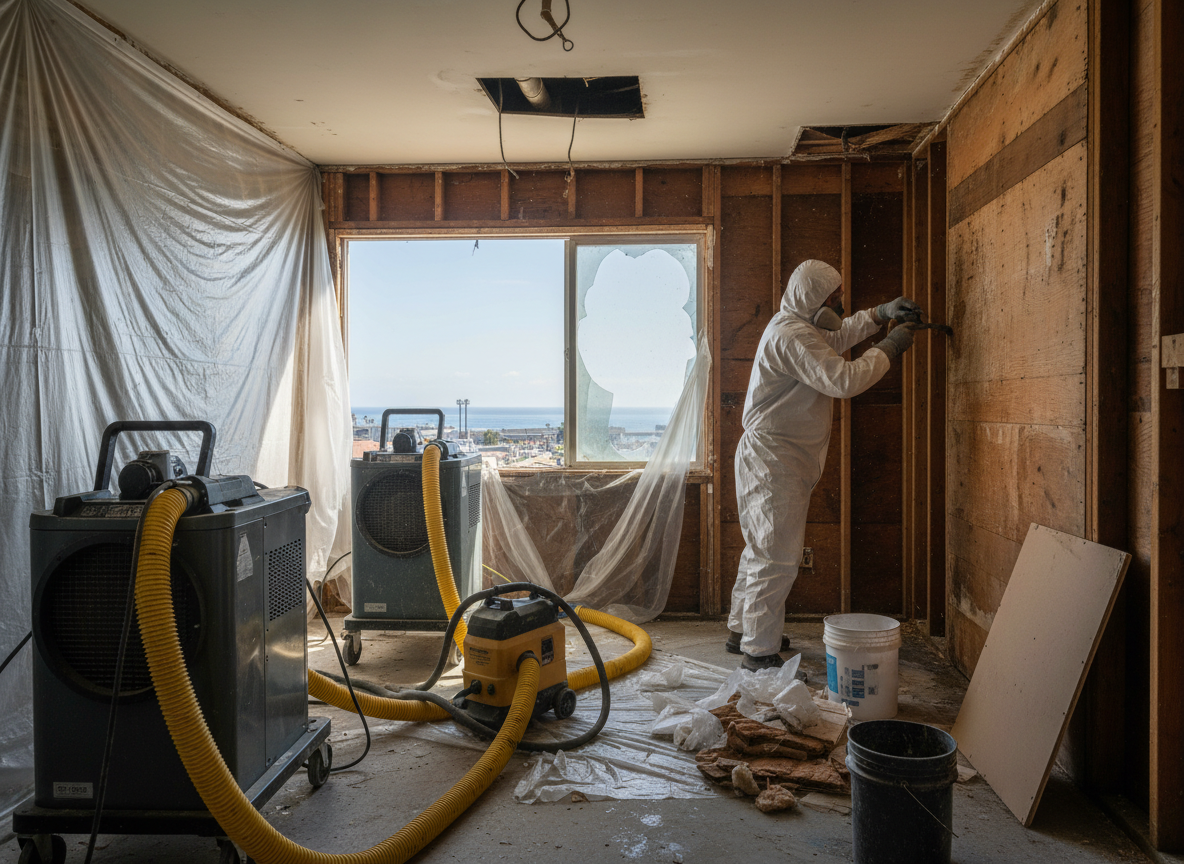
San Pedro homes near the Port of Los Angeles and in older sections of Downtown often feature stucco exteriors and crawlspaces that trap moisture after leaks or flooding. The mild Mediterranean climate with marine influence keeps relative humidity elevated year-round, allowing mold to colonize drywall, insulation, and subfloors within 48 hours. Remediation crews must remove affected materials while containing spores to prevent spread into adjacent rooms, especially in compact lots common around Point Fermin Park.
Water intrusion from heavy marine-layer fog or winter rains frequently affects properties in Rancho Palos Verdes and Harbor City where slopes direct runoff toward foundations. Technicians use moisture meters and thermal imaging to locate hidden saturation behind cabinets and under tile, then apply EPA-registered antimicrobials followed by HEPA air scrubbing. Failure to address residual humidity in these coastal pockets leads to recurring growth even after visible water is gone.
Los Angeles County building codes require proper disposal of contaminated materials and documentation of moisture levels before reconstruction. Crews working from the 682 W 9th St base coordinate with local waste facilities in Wilmington and Torrance for disposal runs, keeping projects moving without delays from transport restrictions.
Hidden Moisture Risks in Local Housing
Older San Pedro bungalows and mid-century homes often have plaster walls and limited ventilation that mask moisture behind layers. Marine air keeps surfaces damp longer than inland spots, requiring extended drying with commercial dehumidifiers before any rebuild work begins.
Technician insight
In San Pedro, the thing that catches most people out with Mold remediation after water damage is the marine layer that keeps crawlspaces under Point Fermin homes damp for weeks after the initial leak stops. Homeowners often seal the surface too soon, trapping spores that later bloom through baseboards.
Crawlspace Growth After Roof Leak
A 1940s stucco home near Cabrillo Marine Aquarium had a slow roof leak that soaked insulation above the living room. We found active mold extending into wall cavities due to trapped marine humidity. Containment was set, wet materials removed, and the space dried for five days before clearance. The owners could rebuild without further growth.
How it works
- 1
Inspection and Containment
Technicians arrive 24/7, map moisture with meters, and set up plastic barriers plus negative air machines to isolate the affected zone.
- 2
Material Removal
Saturated drywall, insulation, and flooring are cut out and bagged for proper disposal while protecting unaffected areas.
- 3
Antimicrobial Treatment
EPA-registered products are applied to exposed framing and cavities, followed by HEPA vacuuming of settled spores.
- 4
Drying and Clearance
Industrial air movers and dehumidifiers run until readings match unaffected areas; final air sampling confirms safe levels before rebuild.
Pricing
Cost depends on square footage affected, depth of hidden moisture, and disposal volume; upfront quotes provided after inspection.