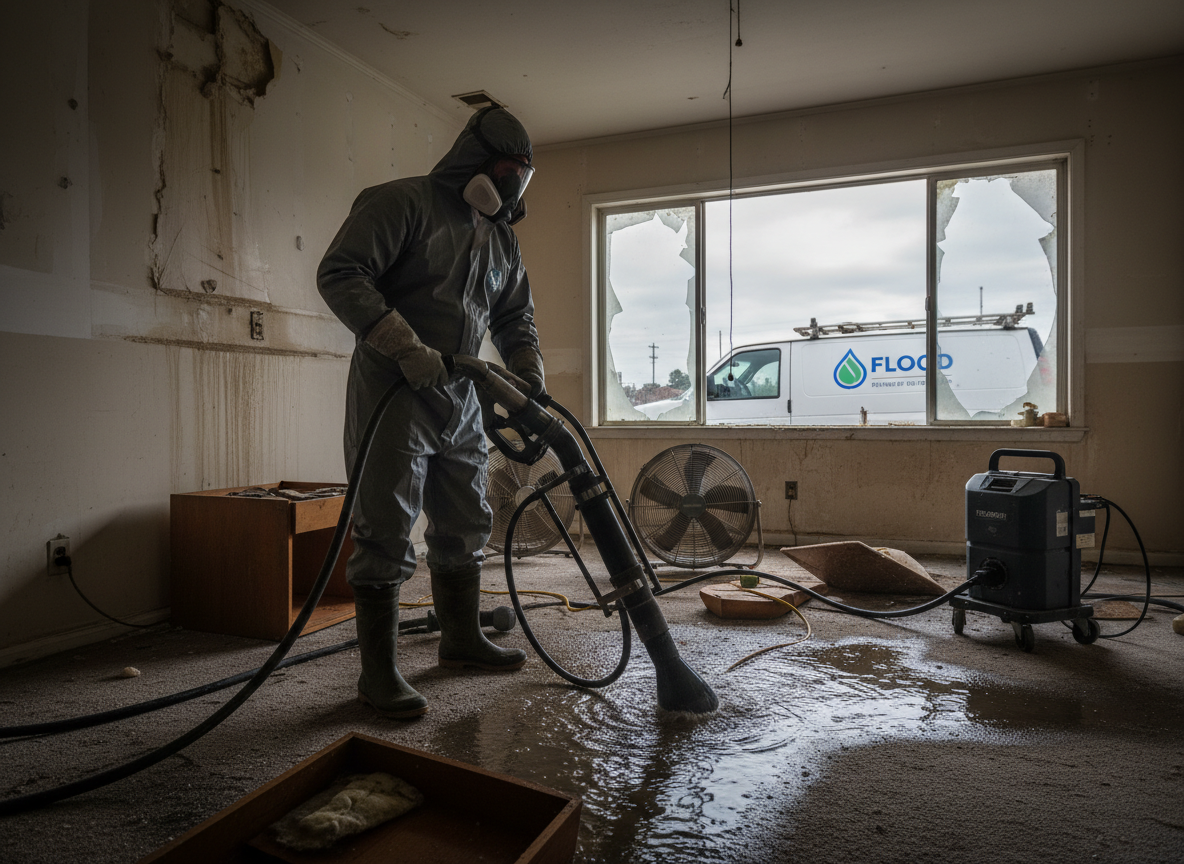
San Pedro homes built before the 1960s often sit on raised foundations or older slab construction near the Port of Los Angeles, where winter storms push water through crawl spaces and into wall cavities. Marine influence keeps humidity high even after rain stops, so extraction must include dehumidification tied to local weather patterns rather than generic drying times. Crews working from 682 W 9th St routinely check for hidden saturation in lath-and-plaster walls common in Downtown San Pedro and Point Fermin neighborhoods.
Runoff from the hills above Rancho Palos Verdes and Harbor City can overwhelm storm drains along Gaffey Street and Pacific Avenue, sending water into basements and garages. Technicians test for salt intrusion from the marine layer because it accelerates corrosion in metal framing and electrical boxes. Containment barriers are placed early to keep affected zones from spreading moisture into adjoining rooms still used daily by residents.
After extraction, moisture mapping with meters tracks progress room by room because older San Pedro construction materials absorb and release water at different rates than newer builds in nearby Torrance or Wilmington. Final clearance includes checking under cabinets and behind built-ins that line many Point Fermin Park area homes. Work stops only when readings match pre-loss conditions recorded at the start of the job.
Winter Rain Patterns in San Pedro
Heavy but brief downpours between December and March interact with the marine layer to extend drying times beyond what inland Los Angeles County jobs require. Crews adjust equipment placement to account for consistent onshore breezes that can reintroduce moisture through open vents.
Technician insight
In San Pedro the thing that catches most people out with flood restoration services is how the marine layer keeps humidity elevated for days after the rain stops. Older homes near the Port of Los Angeles and in Point Fermin have plaster walls that hold moisture longer than drywall, so skipping the extra monitoring visits always leads to callbacks.
Crawl Space Flood After Winter Storm
Water entered a 1940s home in Downtown San Pedro through foundation vents during a December rain event. Meters showed saturation in floor joists and insulation that standard fans would miss. Extraction and targeted drying equipment ran for six days while daily readings tracked the marine-influenced humidity. The space passed clearance with no mold growth reported at the follow-up visit.
How it works
- 1
Initial Assessment
Technician arrives within hours, documents visible water lines, and uses meters to locate hidden saturation in San Pedro homes.
- 2
Water Extraction
Pumps and wands remove standing water from slabs and crawl spaces common in older Downtown San Pedro properties.
- 3
Drying and Monitoring
Air movers and dehumidifiers run while daily readings track progress against the area's high ambient humidity.
- 4
Sanitation and Clearance
Antimicrobial treatment followed by final moisture verification before handing the space back to the homeowner.
Pricing
Upfront quotes after inspection; final cost depends on water volume, affected square footage, and drying duration required by local weather.