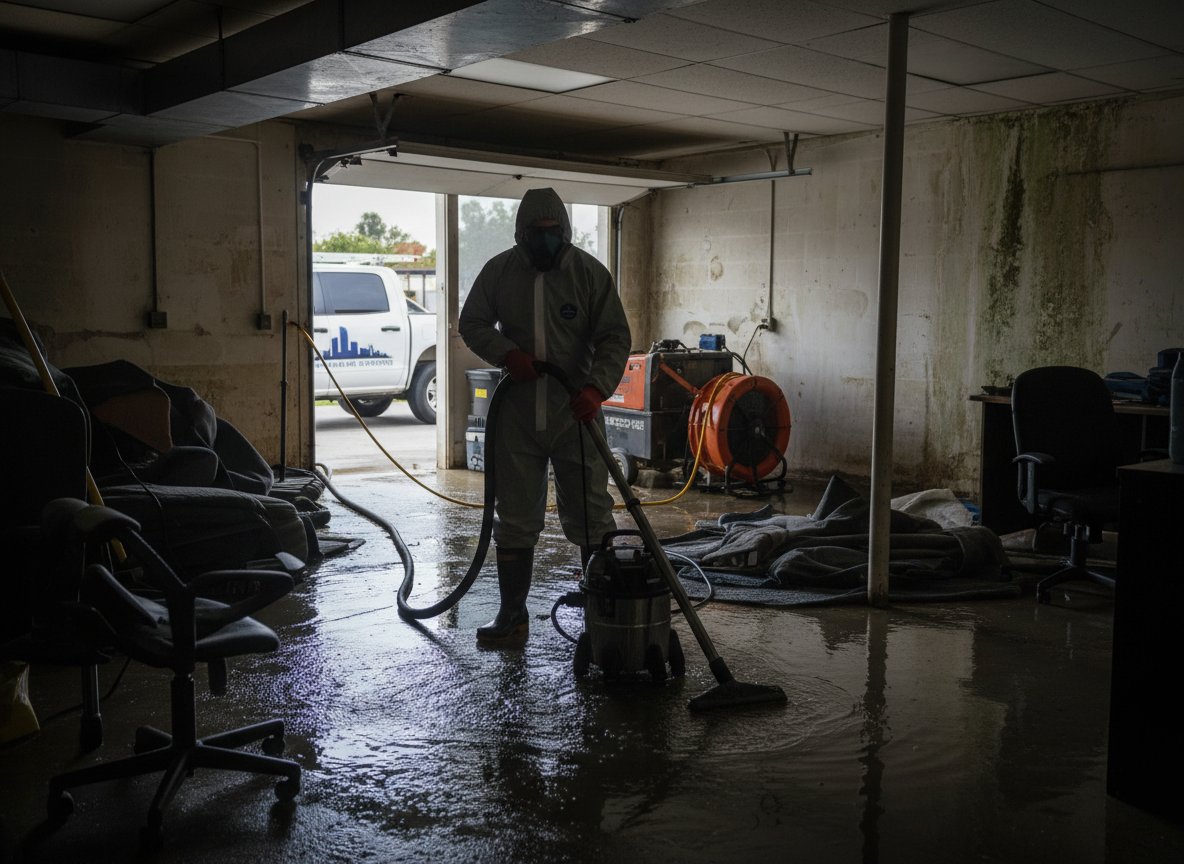
San Pedro's older housing stock in neighborhoods like Downtown San Pedro and near the Port of Los Angeles often features plaster walls and raised foundations that trap moisture from marine-influenced humidity. Emergency water cleanup starts with stopping the source, then uses industrial extractors to pull standing water before it migrates into subfloors common in 1940s-1960s builds. Delaying extraction lets salt air accelerate corrosion on metal lath and electrical boxes.
Marine climate keeps relative humidity elevated even after the rain stops, so we deploy air movers and dehumidifiers calibrated for Los Angeles County coastal conditions. In Point Fermin or Rancho Palos Verdes hillside homes, gravity can send water toward lower rooms and garages, requiring moisture mapping with thermal cameras to locate hidden saturation behind cabinets or under tile. We document affected materials for insurance adjusters who handle claims from Long Beach and Torrance properties.
Edge cases include sewage-tainted water from older sewer lines near the harbor or appliance leaks that soak particleboard subfloors installed before current moisture standards. Crews remove unsalvageable drywall and padding the same day to prevent mold growth favored by the mild but persistently damp air. All work follows Los Angeles County guidelines for containment and disposal of contaminated materials.
Technician insight
In San Pedro the thing that catches most people out with Emergency water cleanup is how the marine layer keeps humidity high enough that plaster walls in 1950s Downtown homes stay damp for days longer than they expect, letting water wick into the lath and force more demolition than a quick mop-up would suggest.
Burst Supply Line in Harbor City Adjacent Home
A kitchen supply line split overnight in a 1960s single-story house near Wilmington. Water traveled under the slab into the adjacent living room and soaked the original hardwood. We extracted standing water the same morning, removed baseboards and lower drywall, then ran drying equipment for four days until meter readings dropped below 12 percent. The homeowner avoided mold issues and the insurer approved the scope without delay.
How it works
- 1
Arrival and Source Control
Technician reaches the San Pedro address within the hour, shuts off water at the meter or fixture, and isolates the affected zone.
- 2
Water Extraction
Standing water is removed with truck-mounted pumps and portable extractors, focusing on carpet, hardwood, and concrete slabs typical in local homes.
- 3
Drying and Monitoring
Air movers, dehumidifiers, and moisture meters are placed; readings are logged daily until drywall and framing reach acceptable levels for the coastal climate.
- 4
Final Assessment
Property is inspected for remaining moisture, affected materials are listed, and a report is prepared for the homeowner and insurer.
Pricing
Pricing based on square footage affected, water category, and drying duration; upfront quote provided before work begins.