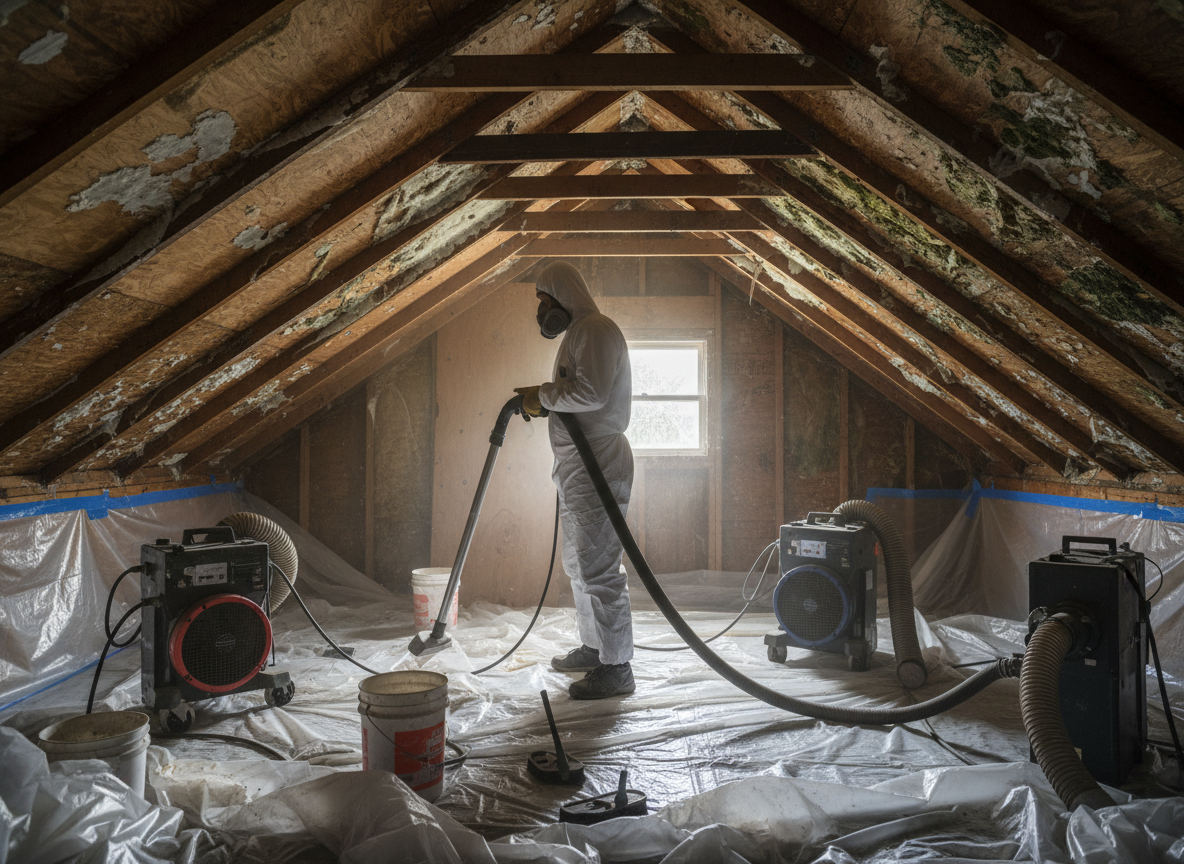
San Pedro's housing stock, much of it built before 1960 near the Port of Los Angeles and in neighborhoods like Downtown San Pedro and Point Fermin, features steep pitched roofs with limited ridge venting. Marine influence keeps relative humidity elevated year-round, so small roof leaks or bathroom exhaust leaks quickly saturate insulation and rafters. Attic mold remediation here starts with containment to prevent spores from migrating into living areas, followed by HEPA vacuuming and removal of affected cellulose or fiberglass. We avoid bleach because it leaves moisture behind and fails on porous wood; instead we use EPA-registered antimicrobials labeled for structural lumber and follow Los Angeles County air-quality guidelines during disposal.
Access is often the first real constraint. Many Point Fermin and Harbor City homes have finished ceilings with minimal scuttle holes, so we cut inspection openings only where necessary and patch to match existing drywall texture. Salt-laden air accelerates corrosion on metal truss plates once moisture is present, which is why we photograph every connection before and after treatment. When mold extends into wall cavities we coordinate with the roofing contractor so the leak source is fixed the same week rather than weeks later when rain returns.
Homeowners in Rancho Palos Verdes and Wilmington sometimes assume a musty smell means only surface cleaning is needed. In reality, the marine layer keeps attics damp enough that hidden growth on the underside of roof sheathing is common. We pull insulation samples for lab confirmation when discoloration is widespread, then dispose of contaminated material at approved Los Angeles County facilities. Post-remediation verification includes moisture readings below 12 percent on all structural members before new insulation is installed.
Technician insight
In San Pedro, the thing that catches most people out with attic mold remediation is salt air from the Port of Los Angeles corroding truss plates once moisture sits in pre-1960 attics; homeowners often miss it because the growth hides above the insulation line.
Roof Leak Mold in Point Fermin Attic
A homeowner in Point Fermin noticed a musty odor after winter marine fog. We found water tracking from a loose flashing into cellulose insulation over the master bedroom. After removing saturated material, treating rafters, and confirming the roof repair, the attic dried and passed clearance testing within five days.
How it works
- 1
Inspection and Containment
We enter the attic through existing access or a small opening, map visible growth with moisture meters, and set up plastic sheeting and negative air to keep spores out of living spaces.
- 2
Source Identification
We trace leaks from roof penetrations, bathroom fans, or skylights common in San Pedro's older stock and document conditions for the homeowner and any insurance adjuster.
- 3
Removal and Treatment
Affected insulation is bagged and removed; wood is cleaned with approved antimicrobials, HEPA-vacuumed, and dried with air movers until readings drop below 12 percent.
- 4
Verification and Clearance
Independent lab samples confirm spore levels match outdoor baselines before we reinstall insulation and seal the access point.
Pricing
Cost depends on square footage accessed, whether insulation must be replaced, and how many inspection openings are needed in finished ceilings.